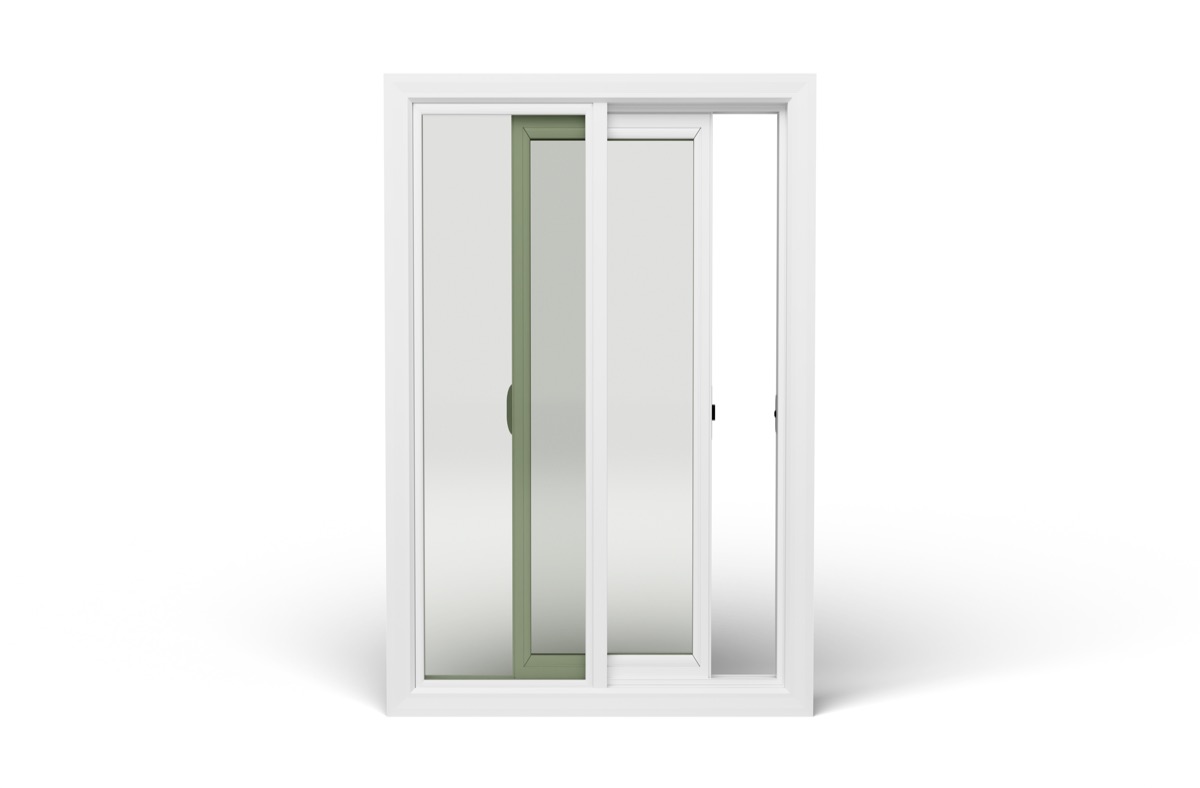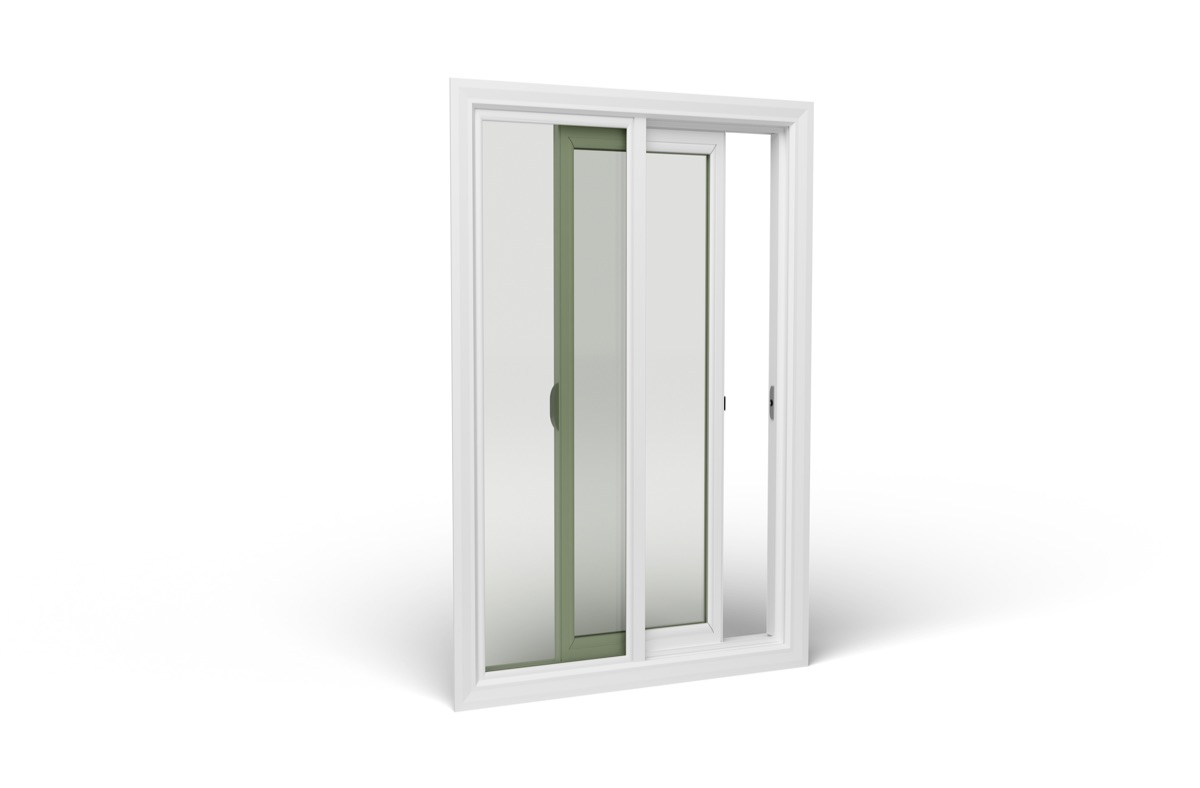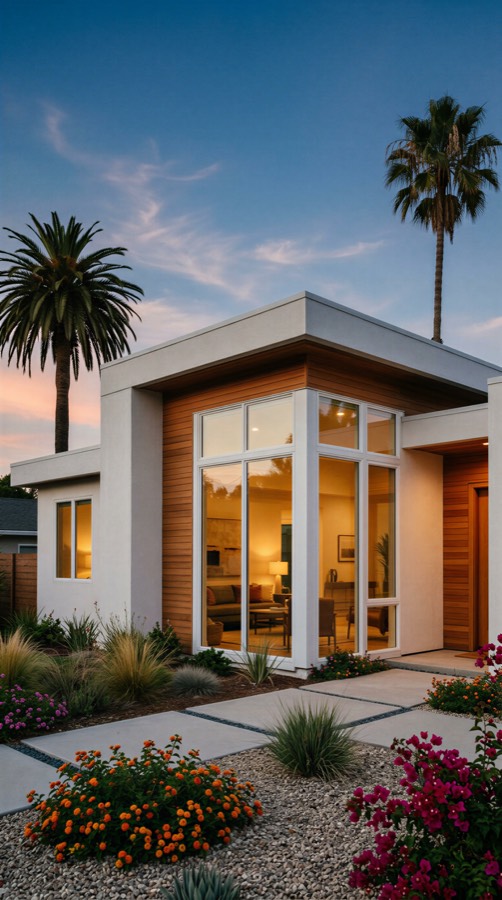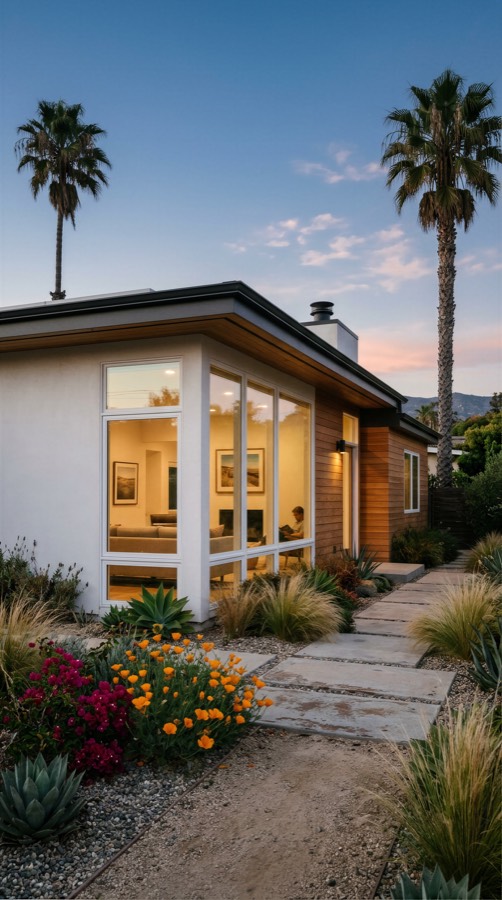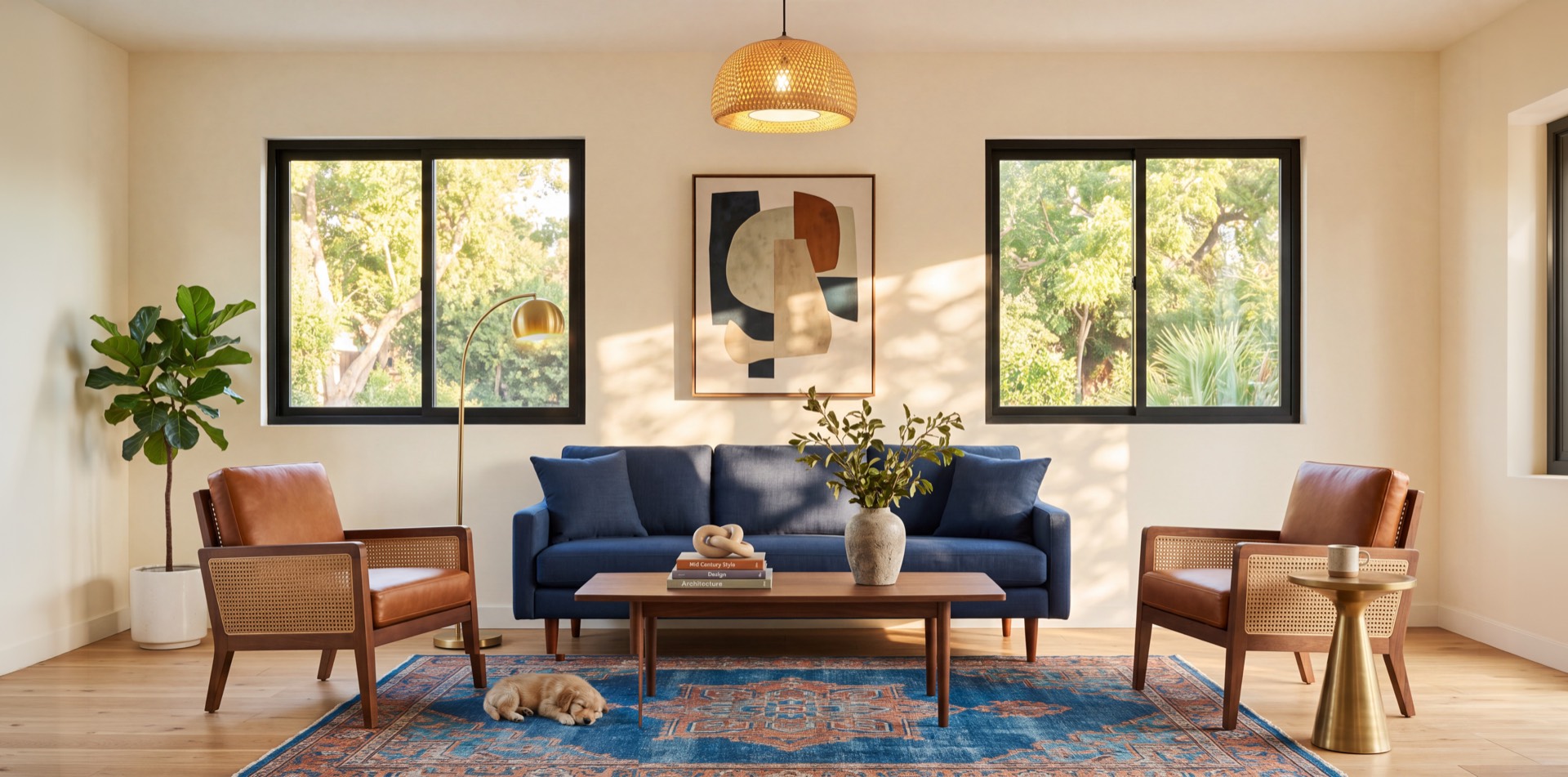
The horizontal slider is the workhorse of residential replacement. One sash glides past the other on a level track, so the window needs no swing clearance inside or outside — the reason it dominates bedrooms, hallways, and any opening facing a walkway or patio.
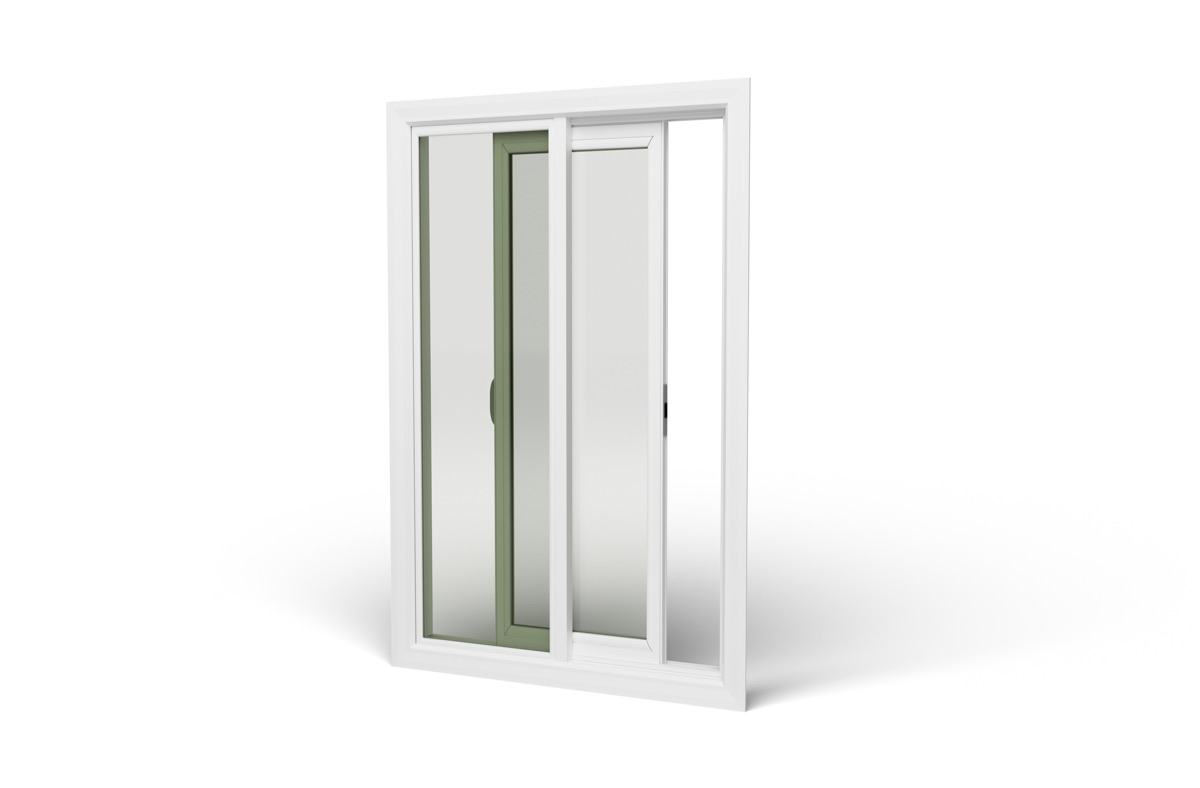
The sash glides sideways in its own frame, so nothing opens into the room or out over a walkway. Furniture, a bed, or a planter can sit right up to the glass.
A slider spans an opening a hung window can't, and keeps the glass area generous for its size. Over a kitchen counter it makes a natural pass-through to the patio.
One lock, one motion to open, and the sash lift out from inside the room so both sides of the glass can be cleaned without a ladder.
Sliders suit wide openings better than any other operating style. Because the sash travels sideways rather than lifting, a two-panel slider can span an opening that would be impractical for a hung window, and the glass area stays generous relative to the frame.
Both sash lift out for cleaning from inside the room. On XO and OX configurations one panel is fixed and one operates; XOX gives you a fixed center picture panel with an operating sash on each end.
Handing is read from outside the house. We confirm it for every opening at the measure.
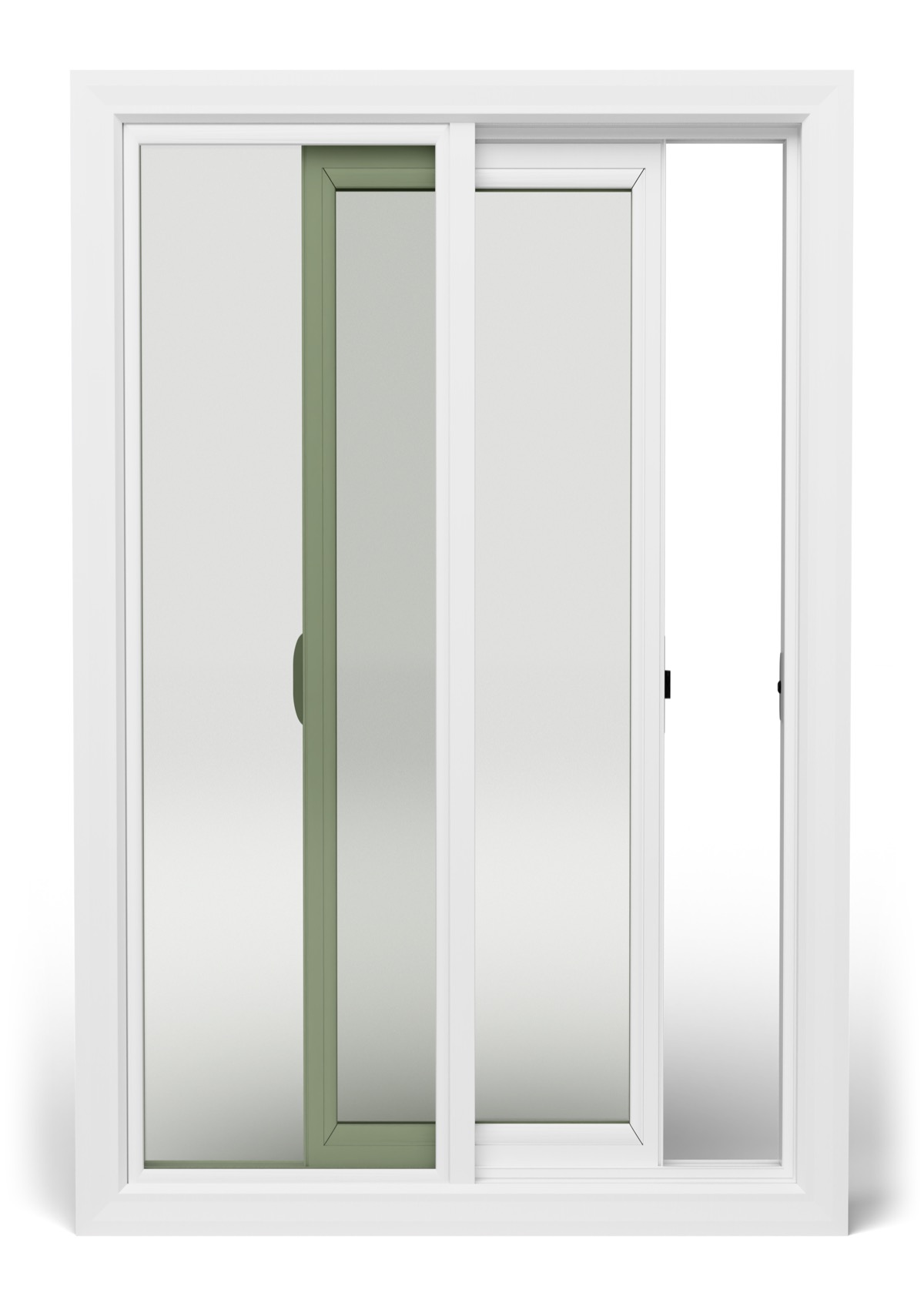
The left panel slides, the right stays fixed (viewed from outside). The most common slider.
The mirror image: the right panel slides. Choose by where you stand to open it and where the breeze comes from.
A wide fixed centre for the view, with an operating panel at each end. Equal or unequal panel splits.
Hover a configuration to watch it slideTap a configuration to watch it slide
The choices that apply to a sliding window. Everything else comes standard.
White and Almond in the Pacific Series; Black in the Laguna Series.
Colors →Between the glass, or simulated divided lite.
Grids →Full-height insect screen on the operating panel.
Lock and hardware supplied to match the series finish.
A window is only as secure as its hardware. Every part a slider depends on — the lock, the pull, the rollers, the interlock — is chosen to keep the house closed when it should be and to open easily when you want it to.
The lock on the meeting rail draws the operating sash tight against the fixed panel. Locked, the sash can't be slid open from outside, and closing it snug compresses the weatherstrip for a tighter seal.
A pull built into the sash lets you open and close the window with one hand. It sits close to the frame, so there is nothing to catch a curtain or a sleeve.
The operating sash rides on rollers in the sill track, so it glides instead of dragging — smoothly on the first day and years later.
When the window closes, the two sashes hook together along the full height of the meeting rail. The interlock resists prying and stops drafts where the panels meet.
Which panel opens. Handing is always read from outside the house: XO opens on the left, OX on the right. Pick the side you can reach easily and that catches the breeze — we mark it on every opening at the measure.
Yes. The sash lift out from inside the room, which puts both faces of the glass within reach — useful on a second storey.
Often, but check the size. Building code sets a minimum clear opening for bedroom egress, and on a slider only the operating panel opens — roughly half the width. We confirm it against code for every bedroom opening before anything is ordered.
Not ours by default. Grids between the glass sit sealed inside the insulated unit, so the glass still wipes clean as one flat surface.
We measure, quote, and install. One company, start to finish.