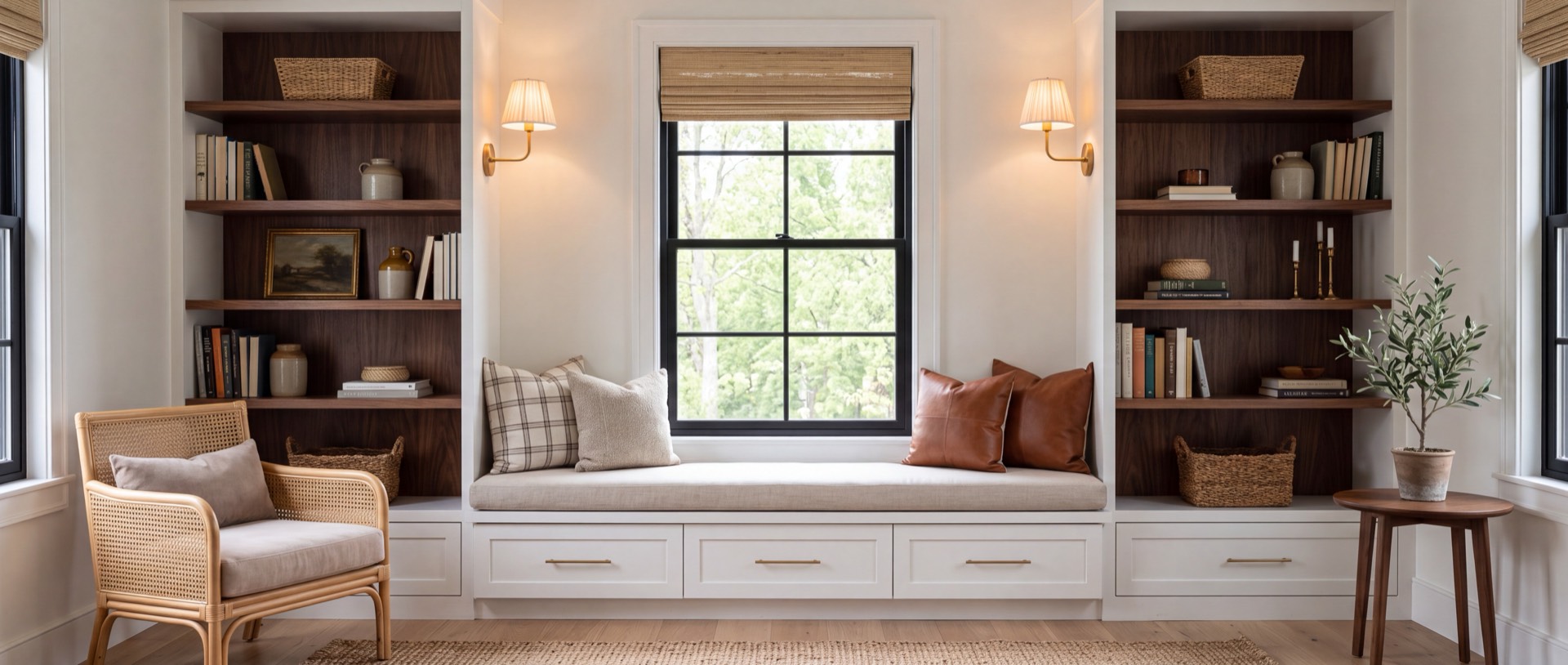
Grids are the fastest way to change how a window reads from the street, and the easiest thing to get wrong. There are two separate decisions here — the pattern and how the bar is built — and they are worth taking one at a time.
Match the pattern to the architecture rather than to taste alone. A prairie grid on a colonial reads as a mistake, and a colonial grid on a mid-century house reads the same way.
The traditional divided-light layout: the sash is split into equal rectangles, most often 6 or 9 per sash. It is the pattern people picture when they picture a grid, and the safest choice on a colonial, cape, farmhouse, or any home whose original windows were divided.
Bars set in from each edge form a border, leaving the center of the glass open. It comes out of the Prairie School houses of the early 1900s and suits craftsman and mission homes — you get the detail of a grid without cutting up the view.
Bars cross at 45 degrees to make a diamond lattice. Historically a leaded-glass pattern, so it reads Tudor, English cottage, and storybook revival. Most often used on a feature opening — an entry sidelite or a stair landing — rather than a whole elevation.
A single row of lites across the top of the sash, with the rest left clear. It gives the elevation a horizontal line to read without obstructing anything at eye level. Common as a craftsman detail and increasingly used on modern homes in black.
One bar inset a few inches from the frame all the way around. The lightest grid we make — enough to break the flatness of a large pane, not enough to read as a divided window. Frequently specified on picture windows flanked by gridded operating units.
Grids are laid out per opening, so an unusual pattern is a drawing question, not a manufacturing one. If you are matching existing windows, photograph them with a tape measure in the shot and we will lay the pattern out to match.
This is the decision that affects cleaning, cost, and how convincing the window looks up close. Everything else about the unit stays the same.
The bar is sealed inside the insulated glass unit, in the same space the argon occupies. Nothing protrudes into the room or onto the exterior, so the glass wipes clean in one pass with no edges to work around. This is what we build unless you ask for something else, and it is what the overwhelming majority of vinyl replacement windows use.
Bars are bonded to both the interior and exterior faces of the glass, with a matching spacer inside the sealed unit lining up behind them. From any normal viewing distance the window reads as true divided light, because the bar casts a real shadow and catches real light — which a grid sealed between the panes never does.
Once the pattern and the construction are settled, what is left is the shape of the bar itself and the colour it is supplied in.
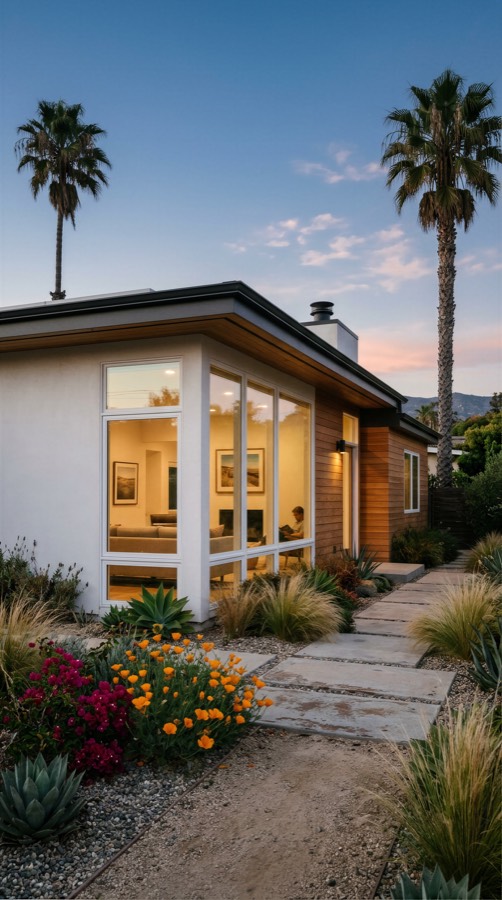
Grids are optional on every unit we build. Left off, the sash is a single clear pane.
We bring samples to the estimate and hold them up against the opening.
