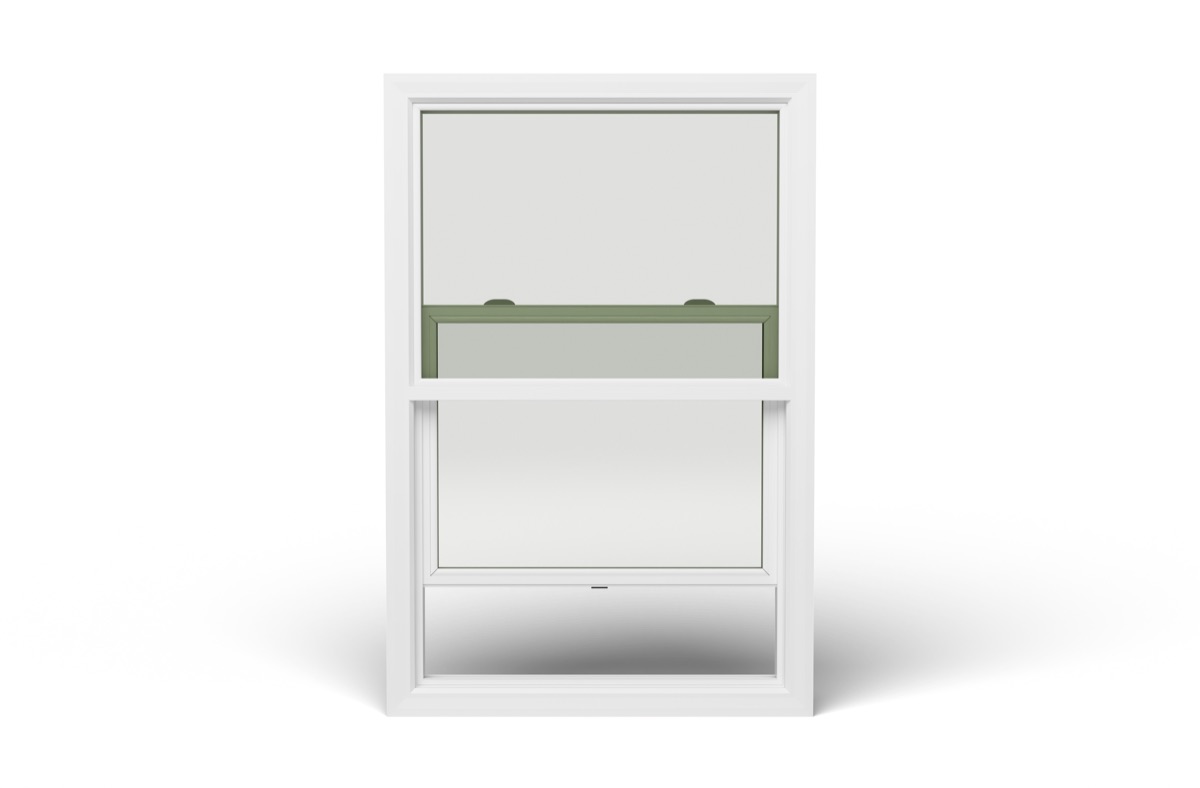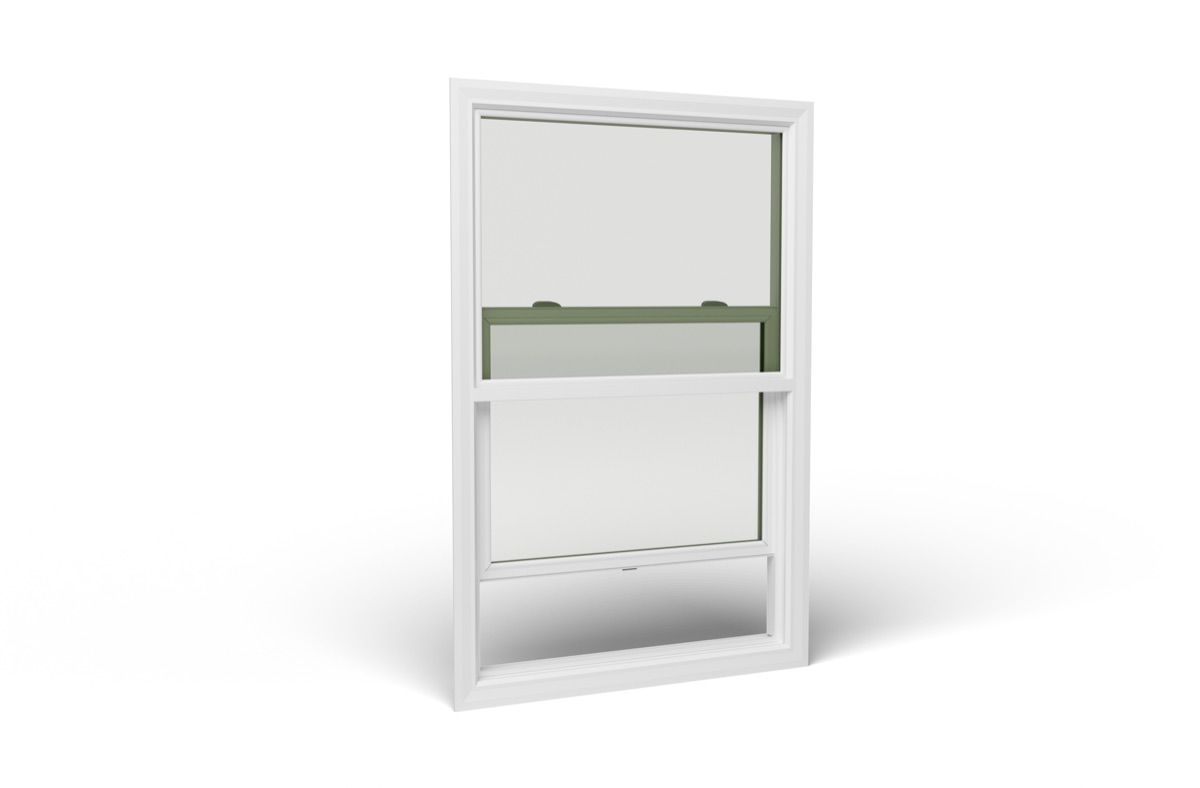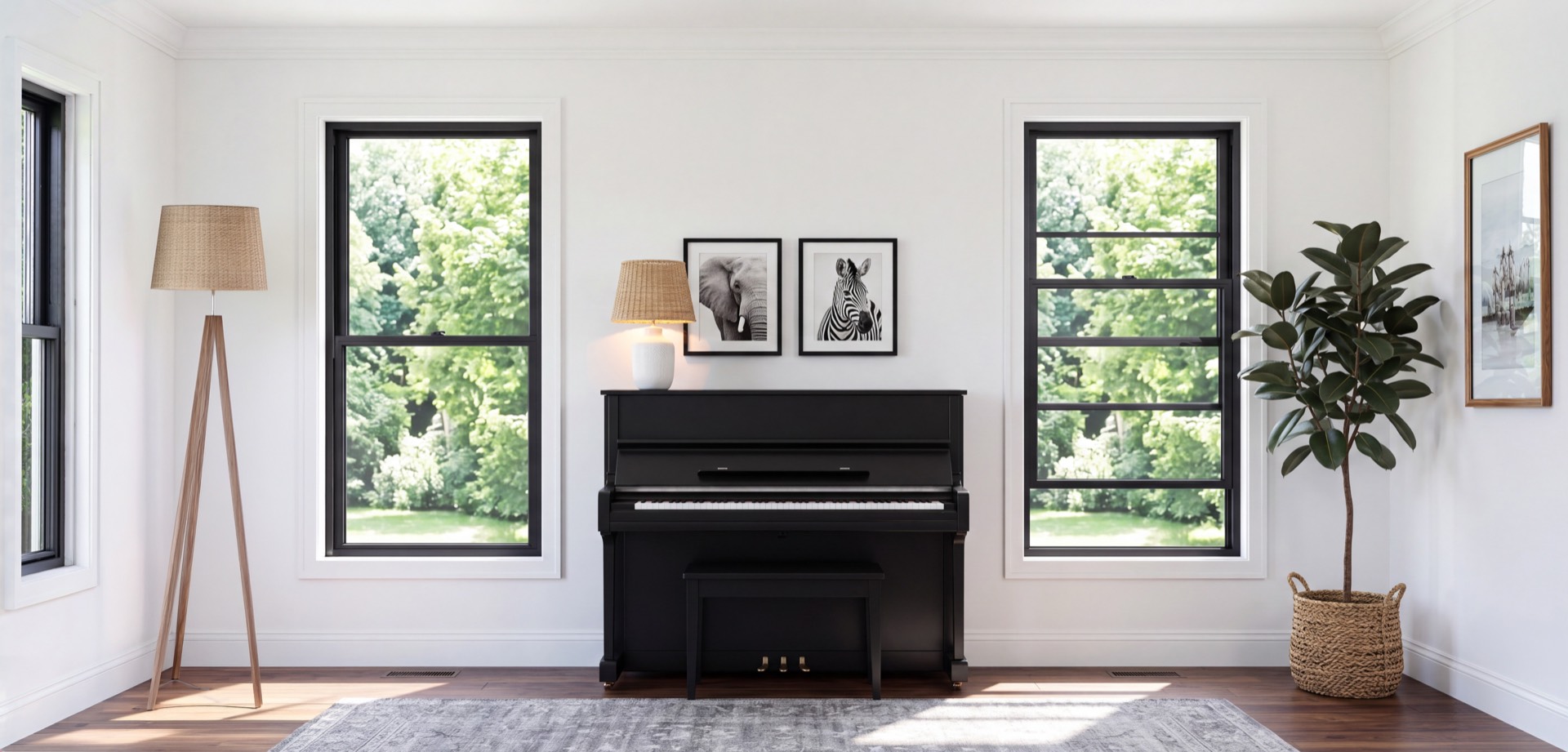
A double hung operates top and bottom. Lowering the upper sash and raising the lower one sets up a convection loop in the opening — warm air leaves at the top while cooler air enters below — which no other window style does in a single unit.
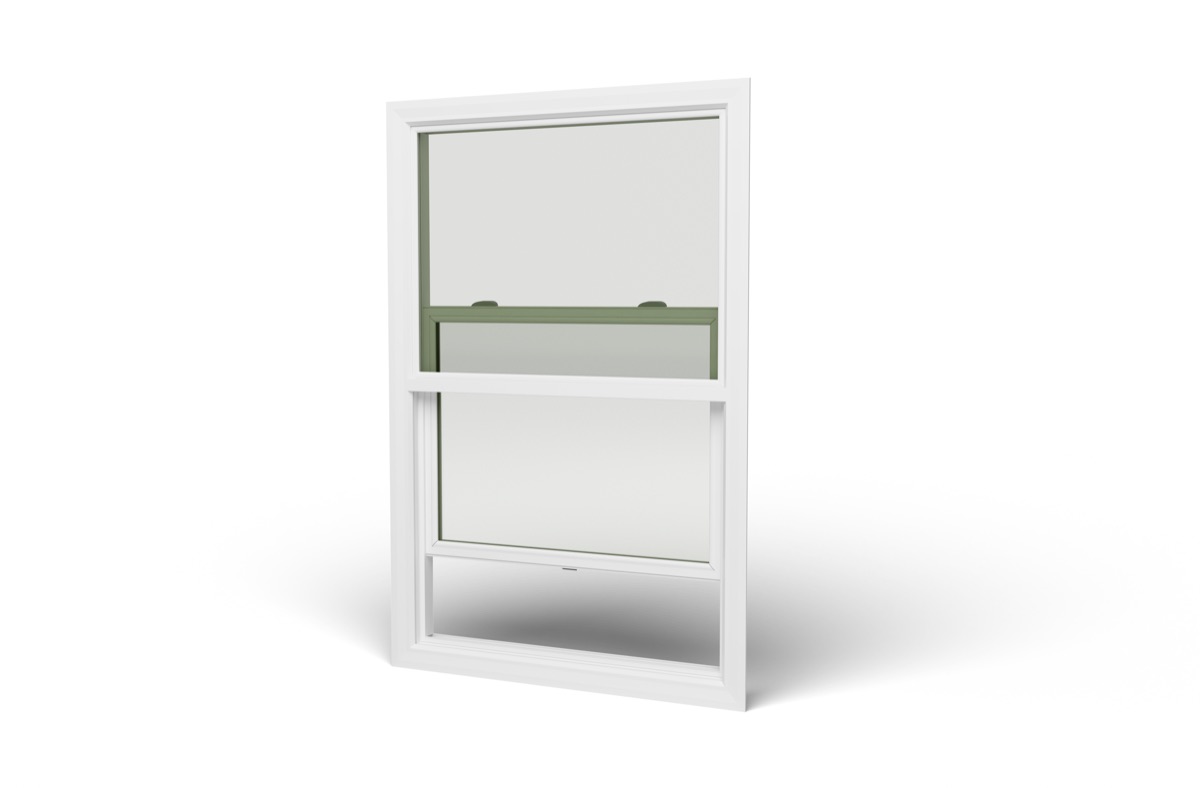
Lower the top sash and raise the bottom one: warm air leaves at the top while cooler air comes in below — a convection loop no other style gives you in a single unit.
Open the top, keep the bottom closed and locked. It is the choice for upstairs bedrooms and for any room with small children.
Both sashes tilt in, so every pane of glass in the window can be cleaned from inside the room.
That top-sash operation is also the safety argument for second-floor bedrooms and any room with small children: you can ventilate from the top while the bottom stays closed and locked.
Both sash tilt in, so every pane of glass in the unit can be cleaned from inside the room.
Both sashes move — open the bottom, the top, or both at once.
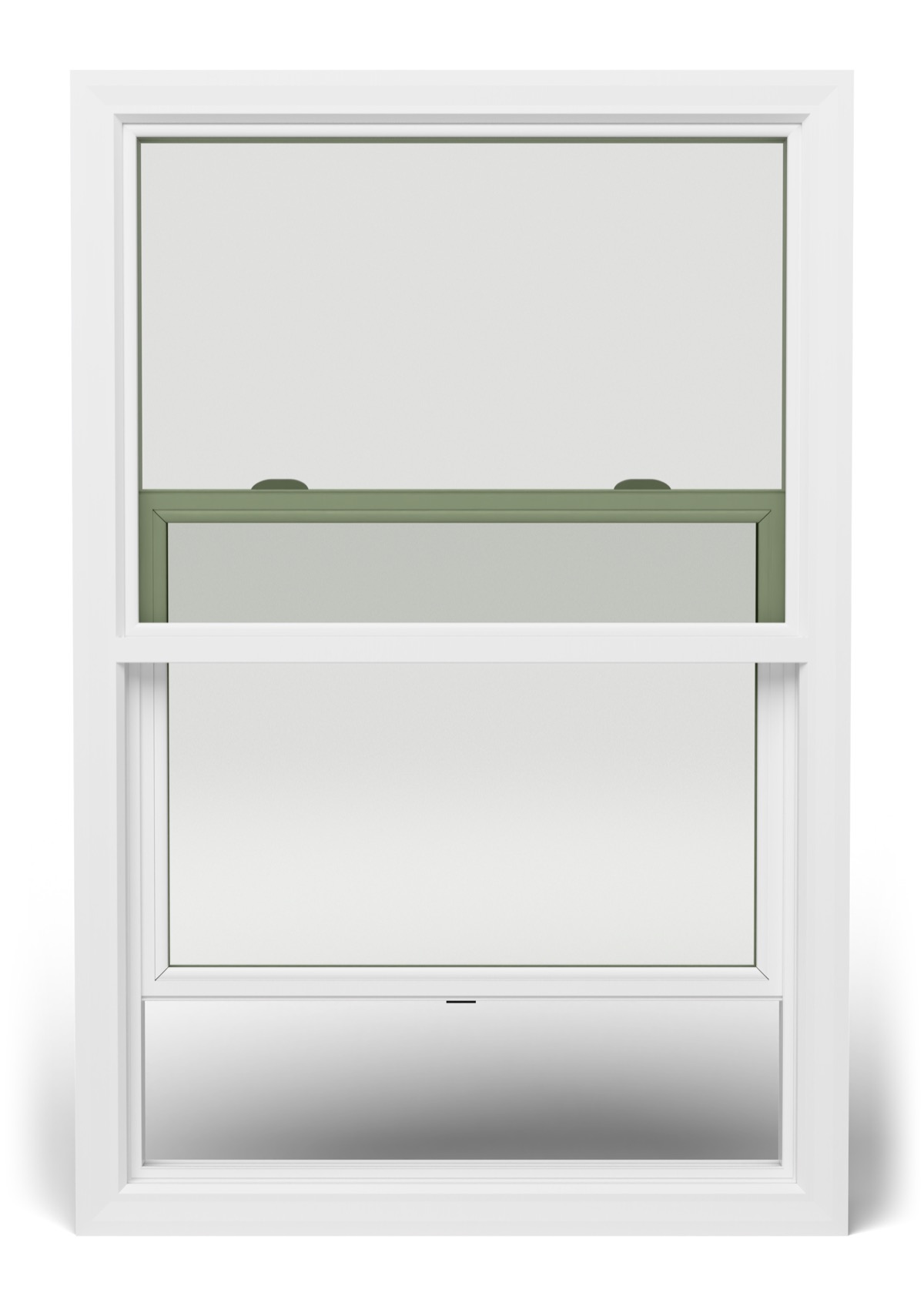
The bottom sash raises and the top sash lowers, independently of each other.
Hover a configuration to watch it openTap a configuration to watch it open
The choices that apply to a double hung. Everything else comes standard.
White and Almond in the Pacific Series; Black in the Laguna Series.
Colors →Between the glass, or simulated divided lite.
Grids →Half screen, positionable over either sash.
Lock and hardware supplied to match the series finish.
Everything a hung window depends on is on the sash: the lock that keeps it shut, the lift you raise it by, the balances that hold it where you leave it, and the latches that let it tilt in for cleaning.
The lock on the meeting rail draws the sashes together and holds them shut. Locked, the sashes can't be opened from outside, and the closed window seals tight against its weatherstrip.
A lift on the bottom rail gives you a solid grip, so the sash rises smoothly with one hand.
Balances in the jambs carry the weight of the sash, so it opens without strain and stays where you leave it — halfway up for air, not sliding back down.
Release the latches and the each sash tilts in toward you, so every pane can be cleaned from inside the room.
Both sashes of a double hung move; only the bottom sash of a single hung does. The double hung costs a little more and gives you top ventilation and inside cleaning of both sashes.
Warm air collects near the ceiling. Opening the top lets it out while the bottom stays closed — ventilation without an open window at a child's height.
Often, but check the size. Each sash opens roughly half the height, and building code sets a minimum clear opening for bedrooms. We confirm it for every bedroom opening before anything is ordered.
We measure, quote, and install. One company, start to finish.